Relocation Checklist & Timeline
Moving to Saint Lucia requires careful planning. Below is a phased timeline covering the key steps from initial decision to settling in. Start at least 3–6 months before your target move date.
Phase 1: Planning (3–6 Months Before)
| Task | Details | Timeline |
|---|
| Determine visa/permit type | Live It visa (digital nomad), work permit, or visitor stay. See Visas & Permits below. | 6 months before |
| Research housing | Rodney Bay (expat hub), Castries, Marigot Bay, or Soufriere. See Housing Guide. | 4–6 months |
| Obtain health insurance | International expat coverage with medevac. Sagicor, Pacific Prime, MSH International, Cigna Global. | 3–4 months |
| Start pet import process | Veterinary import permit, rabies vaccination, health certificate. See Shipping & Customs. | 3–4 months |
| Get international documents | Apostilled birth certificates, marriage certificates, police clearances, school transcripts. | 3–4 months |
| Research schools | Apply to ISSL or other schools for children. Waiting lists may apply. See Education. | 4–6 months |
Phase 2: Preparation (1–3 Months Before)
| Task | Details | Timeline |
|---|
| Book shipping | Get quotes for container (20ft or 40ft). Prepare detailed inventory in English with serial numbers for electronics. | 2–3 months |
| Secure accommodation | Sign lease or book temporary housing. Expect 1–2 months deposit + first month. | 2–3 months |
| Apply for visa/permit | Live It visa: email application at least 2 weeks before travel. Work permit: 4–6 weeks processing. | 1–2 months |
| Arrange vehicle | Decide: import a car (high duties 35–125%) or buy locally. See Vehicle Import. | 2–3 months |
| Notify banks and utilities | Inform home bank of relocation. Set up international transfers. Cancel home utilities. | 1 month |
| Gather banking documents | Bank reference letters, proof of income, apostilled ID documents. See Banking. | 1–2 months |
Phase 3: Arrival (First 30 Days)
| Task | Details | Priority |
|---|
| Get temporary driving permit | XCD $54 / USD $20 at police station or car rental. Valid 3 months. | Week 1 |
| Get SIM card | Flow or Digicel at airport or any branch. Passport required. | Day 1 |
| Set up internet | Flow fibre, Digicel fibre, or Starlink. 1–2 week installation wait. | Week 1 |
| Open bank account | Visit bank with passport, proof of address, reference letters. See Banking. | Weeks 1–2 |
| Register with embassy | Register with your country's embassy or consulate for emergency assistance. | Week 1 |
| Clear shipped goods | Hire customs broker. Expect 3–6 weeks transit time from US/UK. | Weeks 2–6 |
| Register with NIC | National Insurance Corporation registration if employed locally. | Week 2 |
| Explore the island | Visit key locations, introduce yourself to neighbours, join expat groups. | Ongoing |
Key Contacts on Arrival
Immigration Department: +1 (758) 468-4601 | Customs & Excise: +1 (758) 468-4801 | Police (non-emergency): +1 (758) 456-3600 | Emergency: 911 or 999 | Tapion Hospital: +1 (758) 459-2000 | OKEU Hospital: +1 (758) 457-6400
Visas & Residence Permits
Saint Lucia offers several pathways for foreigners to live on the island, ranging from short-term visitor stays to permanent residency and citizenship.
Visa & Permit Categories
| Permit Type | Duration | Cost | Key Requirements |
|---|
| Visa-Free Entry |
Up to 6 weeks |
Free |
Valid passport (6+ months). Citizens of US, UK, Canada, EU, CARICOM, and 80+ countries. Can request extension. |
| Live It Visa (Digital Nomad) |
Up to 12 months (renewable) |
EC$125 / ~US$46 (single) or EC$190 / ~US$70 (multiple entry) |
Proof of remote work or study abroad. Proof of sufficient funds (bank statements). No minimum income requirement. Processing ~5 business days. No local income tax on foreign-sourced income. |
| Temporary Work Permit |
Up to 1 year (renewable) |
XCD $500 (~USD $185) |
Employer sponsorship. Employer must prove no suitable local candidate. 4–6 weeks processing. |
| Permanent Work Permit |
Indefinite (renewable) |
XCD $750 (~USD $278) |
Must have held temporary permit. Employer must justify continued foreign employment. |
| Specialist Work Permit |
1–2 years (renewable) |
Varies |
Healthcare, engineering, IT, finance specialists. Skills not available locally. |
| Residence Permit |
Annual renewal |
Varies |
For stays beyond 3 months. Apply through Immigration Department with justification. |
| Permanent Residence |
Permanent |
Varies |
After 5+ years of legal residence with valid permits. Apply to Immigration. |
| CBI Citizenship |
Permanent (citizenship) |
From USD $240,000 |
National Economic Fund donation, real estate, or enterprise investment. Full citizenship with passport. See CBI Program. |
Live It Visa (Digital Nomad) — Application Process
| Step | Details |
|---|
| 1. Gather documents | Passport (6+ months validity, 2 blank pages), 2 passport photos, proof of remote employment or study, bank statements showing sufficient funds, proof of accommodation. |
| 2. Submit application | Email completed form and documents to the Immigration Department at least 2 weeks before travel. |
| 3. Processing | Approximately 5 business days for a decision. You will be notified via email. |
| 4. Pay visa fee | Pay at the airport upon arrival: ~USD $50 (single entry) or ~USD $75 (multiple entry, recommended). |
| 5. Complete e-immigration form | Submit the electronic immigration form at travelslu.govt.lc and present the QR code on arrival. |
Tax Implications for Digital Nomads
Saint Lucia uses a 183-day rule for tax residency. If you spend 183+ days per year in Saint Lucia, you become tax resident. Tax residents who are "ordinarily resident" are taxed on worldwide income. However, residents who are "not ordinarily resident" (e.g. first-year arrivals) are taxed only on Saint Lucian source income and foreign income remitted to the country. Income tax rates: 0% on the first EC$40,000 (personal allowance raised from EC$25,000 in the 2025/26 budget), then 10–30% on higher brackets. Pension income is now exempt from income tax (2025/26 budget). There is no capital gains tax and no inheritance tax. Consult a local tax adviser for your specific situation. See Legal & Tax.
Banking & Finance
Opening a bank account in Saint Lucia as a foreigner is possible but requires more documentation than for locals. Plan to visit a branch in person for best results.
Documents Required to Open an Account
| Document | Notes |
|---|
| Valid passport | Plus a second form of government-issued photo ID (foreign nationals need two IDs at most banks). |
| Proof of address | Utility bill, rental agreement, or employer letter. Some banks accept home country proof initially. |
| Proof of income / employment | Employment letter, pay stubs, or evidence of remote work / freelance income. |
| Bank reference letter | From your current bank (within 6 months). Some banks require two reference letters. |
| Professional reference | Letter from a solicitor, accountant, or other qualified professional (foreign nationals). |
| Tax Identification Number | Your home country TIN or Saint Lucia TIN if applicable. |
| Initial deposit | Varies by bank: typically XCD $500–$2,000 for personal accounts. |
Major Banks for Expats
| Bank | SWIFT Code | Account Types | Notes |
|---|
| Bank of Saint Lucia (BOSL) | LUOBLCLC | XCD, USD, EUR, GBP, CAD | Largest local bank. In-person account opening. Online banking available. |
| 1st National Bank | FNSLLCLC | XCD, USD | Acquired RBC operations. MSME-friendly. Growing branch network. |
| CIBC Caribbean | FCIBLELC | XCD, USD, CAD | Rebranded Jan 2024. Good for Canadian connections. International wire transfers. |
| Republic Bank | RABORBLC | XCD, USD | Trinidad-headquartered. Online banking platform. |
| Bank of Nova Scotia (Scotiabank) | NOSCLCLC | XCD, USD, CAD | Canadian expats often prefer. International network. |
| First Citizens Bank | FTCILCLC | XCD, USD | Trinidad-based. Business-oriented. Added to market recently. |
| EC Global Insurance | — | Savings, fixed deposits | Credit union alternative with competitive rates. |
Practical Banking Tips
- Expect delays: Account opening for foreigners can take 1–4 weeks due to enhanced due diligence (KYC/AML regulations).
- Bring originals: Notarised or apostilled copies of all documents are strongly recommended.
- Remote opening: Some banks allow remote applications, but documents must be sent by mail with apostille and notary certification (ECCB policy).
- Currency: The Eastern Caribbean Dollar (XCD) is pegged at 2.70 to 1 USD. You can also open USD accounts.
- International transfers: SWIFT transfers available at all banks. ECACH for regional transfers. Wise (TransferWise) and PayPal work but have limitations.
- ATMs: Dispense XCD only. US dollars widely accepted in tourist areas (sometimes at 2.50 rate).
- Credit unions: 16+ credit unions on-island offer savings and loan products. Less bureaucratic than banks for basic accounts.
Healthcare for Expats

Saint Lucia has both public and private healthcare. Public facilities are affordable but can have long waits and limited specialist availability. Most expats use private healthcare combined with international health insurance.
Hospitals & Key Facilities
| Facility | Type | Location | Notes for Expats |
|---|
| Owen King EU Hospital (OKEU) | Public | Castries | Main public hospital, 120 beds. Emergency dept 24/7. Foreigners pay higher rates than nationals. |
| St. Jude Hospital | Public | Vieux Fort | Serves the south. US$75M Saudi-funded rebuild completed Nov 2025. 100 beds, 3 operating theatres, CT scan, NICU. Full commissioning expected early 2026. |
| Tapion Hospital | Private | Castries | Only private hospital. 32 beds. Most expats' first choice. Tapion Medicard offers 10% discount. |
| Soufriere Hospital | Public | Soufriere | Basic emergency and outpatient services. |
| Dennery Hospital | Public | Dennery | Small community hospital on the east coast. |
Healthcare Costs for Non-Citizens
| Service | Cost (XCD) | Cost (USD) |
|---|
| Public hospital consultation | $54–$108 | $20–$40 |
| Private outpatient visit (Tapion) | $270+ | $100+ |
| Specialist consultation (private) | $270–$540 | $100–$200 |
| Dental cleaning | $250–$400 | $93–$148 |
| Prescription medications | 30–50% more than US prices |
| Air ambulance (medevac) | $27,000+ | $10,000+ |
Insurance Options for Expats
| Coverage Type | Monthly (USD) | Providers |
|---|
| Basic local plan (individual) | $80–$150 | Sagicor, Caribbean Alliance, CG United |
| Comprehensive individual (under 65) | $150–$200 | Sagicor, Caribbean Alliance |
| Comprehensive family plan | $250–$500 | Sagicor, CG United |
| International expat coverage + medevac | $300–$750 | Pacific Prime, MSH International, Cigna Global, Allianz Care |
Medical Evacuation Coverage is Essential
For serious conditions, complex surgeries, or advanced diagnostics (MRI, some cancer treatments), evacuation to Martinique, Barbados, Trinidad, or Miami may be necessary. Air ambulance starts at USD $10,000+. International health insurance with medevac coverage is strongly recommended for all expats. NIC (National Insurance Corporation) contributions cover some benefits if employed locally, but coverage is limited.
Universal Health Coverage Roadmap
The government unveiled a Universal Health Coverage (UHC) roadmap in April 2025, aiming to improve access and affordability for all residents including long-term foreign residents. Implementation details are being developed through the SLUHC programme. This may eventually reduce out-of-pocket costs for expats who contribute through employment.
Insurance Guide for Expats
Insurance in Saint Lucia is regulated by the Financial Services Regulatory Authority (FSRA) under the Insurance Act Cap. 12.08 of 2008. The industry body is the Insurance Council of St. Lucia. Understanding the local insurance market is essential for expats, as coverage needs differ from home countries.
Major Insurance Companies
| Company | Type | Notes |
|---|
| Sagicor | Life & General | Locally owned, largest insurer in Saint Lucia. Full range of life, health, and property products. |
| NAGICO Insurances | General | Regional insurer, #2 general insurer. Expanded to SLU February 2011. |
| Caribbean Alliance Insurance (CAIC) | General | Regional insurer operating in 14 Caribbean territories. |
| M&C General Insurance | General | Local insurer with 3 locations: Castries, Gros Islet, Vieux Fort. |
| Beacon Insurance | General | Motor, property, and liability insurance. |
| St. Lucia Motor & General | General | Motor and general insurance specialist. |
| CG United Insurance | Life & General | Formerly CoralIsle. Regional life and general coverage. |
Insurance broker: Agostini Insurance Brokers (St Lucia) Ltd — established 1992, longest-standing broker on the island.
Motor Vehicle Insurance (Mandatory)
| Coverage | Detail |
|---|
| Third-party liability | MANDATORY by law (Motor Vehicles Insurance Act). Required for all vehicles on public roads. |
| Bodily injury limits | Max $300,000 per claim; $1,500,000 per event |
| Property damage limits | $250,000 per claim; $500,000 per event |
| Basic third-party cost | Starting ~$1,000/year (~XCD $2,700) |
| Comprehensive coverage | Available; includes hurricane, earthquake, flood damage. XCD $5,400–$10,800/year. |
Health Insurance for Expats
Key Facts
- NOT legally required for residency — but strongly recommended
- REQUIRED for digital nomad work permits (Live It visa)
- Air ambulance evacuation: Starts at US$10,000 — international coverage with medevac is essential
- Medical services: Often expect immediate cash payment; claim reimbursement later
- International providers popular with expats: AXA Global, Allianz Care, Bupa, Cigna, NOW Health International, Pacific Prime, MSH International
CCRIF SPC — Government Parametric Insurance
Saint Lucia participates in the Caribbean Catastrophe Risk Insurance Facility (CCRIF SPC), a regional parametric insurance mechanism that provides the government with rapid payouts after natural disasters.
| Item | Detail |
|---|
| Coverage types | Tropical cyclones, excess rainfall, earthquakes |
| Payout speed | Within 14 days of qualifying event |
| Also covered | WASCO (water utility) and LUCELEC (electricity) have separate CCRIF policies |
| COAST fisheries product | Launched 2019 for fishing communities |
| Recent payout example | US$528,512 for Tropical Cyclone Elsa (2021) |
| Annual contingent liabilities | ~US$15.8M (1.1% of GDP) |
| 1-in-100-year hurricane loss | Estimated US$121M potential loss |
Insurance Market Challenges
- Catastrophe risk: Caribbean insurers retain less than 15% of catastrophe risk — the rest is ceded to foreign reinsurers, affecting premiums
- Coverage gaps: Low and medium-severity weather events may not trigger parametric payouts
- Agricultural insurance: Limited availability for farmers
- Property insurance: Voluntary but strongly recommended, especially for hurricane and flood coverage
- Expat recommendation: Combine local motor/property insurance with international health and medevac coverage for comprehensive protection
Driving & Transport
Driving License Process
| Permit Type | Cost | Validity | How to Obtain |
|---|
| Temporary Visitor Permit |
XCD $54 / USD $20 |
3 months |
Present valid home country license at any police station, car rental agency, or Immigration desk at the airport. Issued on the spot. |
| International Driving Permit (IDP) |
Varies (obtain from home country) |
1 year |
Accepted alongside your home license. Recommended but not strictly required. Obtain before departure from AAA (US), AA (UK), etc. |
| Saint Lucia Driving License |
XCD $150–$300 |
1–5 years |
For long-term residents. Apply at Transport Authority with valid foreign license, proof of residency, and medical certificate. Practical test may be required. |
Essential Driving Information
Rules of the Road
- Drive on the LEFT (UK-style)
- Speed limits: 15–25 mph in towns, 30–40 mph on highways
- Seatbelts mandatory for driver and front passenger
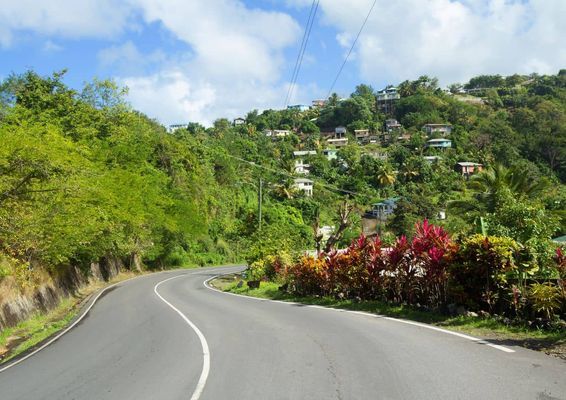
- Roads are narrow, winding, and mountainous, especially the west coast
- SUV or 4WD recommended for rural areas and wet conditions
- Peak traffic: 7:15–8:30 AM and 4:15–6:00 PM in Castries
Vehicle Costs
- Fuel (Jan 2026): Gasoline XCD $2.73/litre (~US$1.01); Diesel XCD $3.52/litre (~US$1.30)
- Car insurance (third-party): XCD $2,700+/year (USD $1,000+)
- Comprehensive insurance: XCD $5,400–$10,800/year
- Car rental (monthly): USD $900–$1,500
- Used car purchase: USD $10,000+ (basic)
- Ride-hailing: Uber launched in January 2026 but was ordered to halt operations in February 2026 due to regulatory disputes with the government. Local alternatives: Allez app (GPS-based, cashless, mainly northern coverage), Tropicab. Traditional taxis and minibuses remain the primary transport options — always agree on taxi fare before starting your journey
Public Transport Options
| Mode | Cost | Notes |
|---|
| Minibuses | XCD $1.25–$10 per ride | Primary public transit. "Full-and-go" basis (no fixed schedule). Green number plates with "M" prefix. Castries–Rodney Bay: EC$2.50. Hours: ~6 AM–11 PM (longer routes end 4–5 PM). Very limited Sunday service. Flag down with hand wave at concrete bus stops. |
| Taxis | XCD $27–$270+ per trip | Licensed taxis: light blue plates with "TX" prefix. NOT metered — always agree fare before trip, cash only. UVF to Castries: ~XCD $230 (~US$85). Castries to Soufriere: ~XCD $245 (~US$90). Abundant in Castries, scarce in rural areas. |
| Ride-sharing apps | Varies | Uber launched in January 2026 but was ordered to halt operations in February 2026 due to regulatory disputes. Allez app: local alternative (GPS-based, cashless payments, mainly northern coverage). Also Tropicab. Traditional taxis remain the primary option. |
| Water taxis / ferries | Varies | Primarily airport transfers, not regular commuter service. FunToSee Island and Hewanorra Express offer UVF to Rodney Bay by sea. Scenic coastal routes available. |
| Car rental | USD $61/day (small); $89/day (SUV) | 64 operators on-island (Hertz, Avis, Budget, Sixt + locals like SunCars). Most practical for expats. Book monthly for better rates. |
Road Conditions & Fuel
| Item | Detail |
|---|
| Northern highway | 4-lane Castries to Choc, generally good condition |
| Southern/rural roads | Narrow, winding, steep, some potholes — SUV recommended |
| Rush hour | 7:15–8:30 AM, 4:15–5:30 PM (north of Castries worst congestion) |
| Castries to Vieux Fort | 36 miles, approximately 55 minutes |
| Gasoline (Jan 2026) | XCD $2.73/litre (~US$1.01/litre) |
| Diesel (Jan 2026) | XCD $3.52/litre (~US$1.30/litre) |
| Speed limits | 10–15 mph city, 30 mph rural, 40 mph highway |
| Cycling | Minimal infrastructure, not recommended for commuting; 14 recreational routes exist |
Temporary Driving Permit
All visitors and new expats need a temporary driving permit: US$20 (valid 3 months). Obtain at the airport, any car rental company, or police station by presenting your valid home country license. Saint Lucia drives on the LEFT (British system). International Driving Permits (IDP) are accepted alongside your home license but not strictly required.
Shipping & Customs
Shipping Household Goods
| Option | Capacity | Transit Time | Estimated Cost (USD) |
|---|
| 20-foot container (FCL) | 1–2 bedroom home contents | 8–12 days (US East Coast); 14–21 days (UK) | $3,000–$6,000 |
| 40-foot container (FCL) | 3–4 bedroom home contents | 8–12 days (US East Coast); 14–21 days (UK) | $5,000–$10,000 |
| Shared container (LCL) | Partial load (per cubic metre) | 10–16 days (US); 18–28 days (UK) | $500–$2,000 |
| Air freight | Small shipments / urgent items | 3–7 days | $5–$10 per kg |
Customs Duties on Household Effects
| Condition | Duty |
|---|
| Items owned and used for 12+ months | Exempt from Import Duty and Consumption Tax |
| Items not for sale or exchange | Must sign customs declaration |
| Imported within 3 months of arrival | Claim exemption at Customs |
| Service charge | 6% of CIF value (Customs service charge on all imports except diplomats) |
| Environmental levy | 1.5% of CIF value |
| Returning nationals (10+ years abroad) | Additional exemptions available |
Required: Passport, original Bill of Lading or Air Waybill, detailed inventory in English (include serial numbers for all electronics and appliances). Duties are calculated on CIF basis (value + insurance + shipping costs). Prohibited items: arms, combustibles, drugs, explosives, chemicals. Hire a licensed customs broker (XCD $500–$1,500) to clear goods. Contact Customs House, Castries: +1 (758) 468-4801.
Vehicle Import Duties
| Engine Capacity | Import Duty | Excise Tax | Total Duty + Tax (approx.) |
|---|
| Up to 1,500 cc | 35% | 20.5% | ~55% |
| 1,501–2,000 cc | 35% | 35% | ~70% |
| 2,001–3,000 cc | 35–45% | 45–55% | ~80–100% |
| Above 3,000 cc | 45–50% | 65–85% | Up to ~125% |
Duties are calculated on CIF value (cost + insurance + freight). VAT of 12.5% applies on top. Popular import brands: Toyota, Honda, Suzuki (many from Japan). Consider buying locally to avoid the import process. A used Honda Fit starts at ~USD $10,000 on-island.
Pet Importation (Dogs & Cats)
| Requirement | Details |
|---|
| Veterinary Import Permit | Apply to Veterinary Services (vlsdsec.agriculture@govt.lc) at least 2 weeks in advance. Fee: EC $45 (~USD $17). Processing: 2 business days. |
| Microchip | 15-digit ISO-compliant microchip required before rabies vaccination. |
| Rabies vaccination | Must be vaccinated after 3 months of age. Vaccination must be 30+ days and less than 12 months before arrival date. |
| Rabies titre blood test | Required 30 days after vaccination, with a 3-month waiting period from blood draw date before entry. |
| Additional vaccines (dogs) | Distemper, Leptospirosis, Hepatitis, Parainfluenza, Parvovirus. |
| Additional vaccines (cats) | Feline Leukemia, Rhinotracheitis, Calicivirus, Panleukopenia, Pneumonitis. |
| Parasite treatment | Endoparasites (tapeworm) + ectoparasites (ticks/fleas) treatment 24–48 hours before entry. |
| Health certificate | International export health certificate from a government veterinarian in the origin country, within 10 days of travel. |
| Entry point | Pets must enter via Hewanorra International Airport (UVF) only. |
| Quarantine | No quarantine if ALL regulations met. Non-compliant pets may be quarantined, returned, or euthanised. |
Banned Dog Breeds
The following breeds and their mixes are prohibited from import to Saint Lucia: Pit Bull Terrier, Bull Terrier, American Staffordshire Terrier, Staffordshire Bull Terrier, British Staffordshire Terrier, Japanese Tosa Inu, Dogo Argentino, and Fila Brasileiro. Contact Veterinary Services: vlsdsec.agriculture@govt.lc
Remote Work Setup
Internet Options for Remote Workers
| Provider | Speed | Monthly Cost (USD) | Notes |
|---|
| Flow Fibre | 50–400+ Mbps | $45–$200 | Most established provider. Hybrid fibre-coax network. Widest coverage. Raised prices ~EC$3/mo in May 2025. |
| Digicel+ Fibre | Up to 1 Gbps | $45–$150 | Newer fibre network offering speeds up to 1 Gbps (gigabit fibre-to-the-home). Up to 100 Mbps upload. Good reliability. Expanding coverage island-wide. |
| Starlink | 100–200 Mbps | $80/month | Satellite internet now available island-wide — a major quality-of-life improvement for remote workers, especially in rural areas with limited fibre coverage. Equipment cost: ~USD $500. Unlimited data. 20–60ms latency. No installation appointment needed. |
| Mobile data (Digicel) | 4G LTE | $55–$95/month | 40–60 GB plans. Good backup connection. Island-wide 4G coverage. |
| Mobile data (Flow) | 4G LTE | $37+/month | 12 GB+ plans. Use as hotspot backup. eSIM available through some providers. |
Coworking & Work-Friendly Spaces
| Space | Location | Facilities | Notes |
|---|
| Orbtronics CoWork | Gros Islet | Dedicated desks, boardrooms, Windows/Mac workstations, 3D printing lab | Purpose-built coworking. Best option for tech professionals. Day passes and monthly memberships. |
| Cafe Ole | Rodney Bay | Wi-Fi, coffee, casual seating | Popular cafe with reliable Wi-Fi. Good for casual work sessions. |
| Cafe en Ville | Vieux Fort | Wi-Fi, food, seating | Cafe option in the south. |
| Hotel business centres | Various | Wi-Fi, meeting rooms, printing | Bay Gardens, Royalton, Sandals offer business facilities. Some open to non-guests. |
| Libraries | Castries, Gros Islet | Free Wi-Fi, quiet space | Basic but free. Limited hours. |
Remote Work Tips
Connectivity Strategy
- Primary: Flow or Digicel fibre at home (100+ Mbps for video calls)
- Backup: Starlink or mobile hotspot (essential for power/internet outages)
- UPS/battery backup: Get a UPS for your router and laptop — power outages happen during storms
- Speed test before signing lease: Confirm internet availability at your rental
Time Zone Advantage
- AST (UTC-4) year-round — no daylight saving changes
- Same as US Eastern during EDT (Mar–Nov)
- 1 hour behind US Eastern during EST (Nov–Mar)
- 5 hours behind UK (GMT); 4 hours during BST
- Ideal for US, Canada, and Latin America collaboration
Expat Lifestyle & Common Challenges
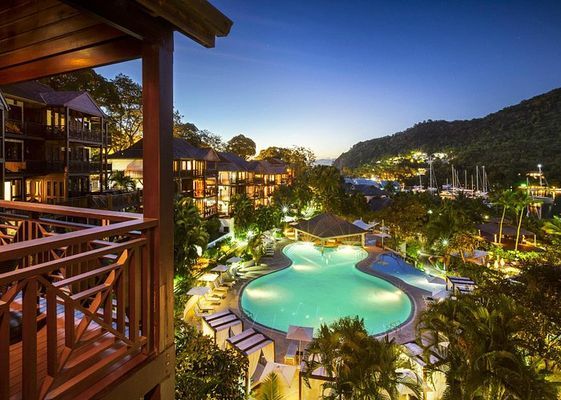
Life in Saint Lucia offers a tropical Caribbean experience with a warm climate year-round (77–86°F / 25–30°C), a slower pace, and social life centred around beaches, dining, sailing, and hiking. However, adjusting to island life comes with real challenges that every expat should anticipate.
Social Environment Update (2025)
In July 2025, Saint Lucia’s colonial-era law criminalising same-sex relations was struck down by the courts, following similar rulings across the Eastern Caribbean (Antigua & Barbuda, St. Kitts & Nevis). While social attitudes continue to evolve, this legal change marks a significant step towards a more inclusive environment for all residents and visitors.
Lifestyle Highlights
Social & Recreation
- Climate: Tropical, 25–30°C year-round; rainy season June–November
- Pace: Slower "island time" is real — embrace it
- Social life: Beach, dining, sailing, hiking, liming (socialising)
- Entertainment: Limited cinema; nightlife mainly in Rodney Bay; seasonal festivals (Jazz, Carnival)
- Groceries: Mix of local markets (cheaper, seasonal produce) and supermarkets (imported goods at premium)
- Alcohol/wine: Imported and therefore expensive (wine from ~US$12–15/bottle retail)
Common Challenges
- Bureaucracy: Government processes can be slow — plan for delays
- Limited specialist medical care: Complex cases require evacuation to Martinique, Barbados, or Miami
- Hurricanes & tropical storms: Peak risk August–October during hurricane season
- Power outages: Occur during storms (though LUCELEC reliability is improving)
- Road conditions: Variable, especially southern and rural areas
- High import costs: Imported consumer goods, electronics, and specialty foods carry premium prices
- Cultural adjustment: Caribbean directness, "lime" culture, and slower pace require patience
Turkey–Saint Lucia Relations & Information for Turkish Expats
Turkey and Saint Lucia established diplomatic relations on May 25, 2015, via a joint declaration signed by both countries' UN Permanent Representatives. Relations developed through Turkey's outreach policy towards Latin America and the Caribbean, initiated in 1998 and revised in 2006.
Diplomatic & Trade Overview
| Item | Detail |
|---|
| Relations established | May 25, 2015 (joint declaration at UN) |
| Turkish Embassy | Port of Spain, Trinidad & Tobago (accredited to Saint Lucia) |
| Honorary Consulate in Castries | #51 Rue Metellus, Castries. Honorary Consul: Mr R. Randall Bain. Email: bainr@canwd.lc. Hours: Mon–Fri by appointment. |
| Bilateral trade volume | US$3 million (as of end 2019) |
| Air Services Agreement | Signed during 1st CARICOM–Turkey Ministerial Meeting, July 2014 |
| Bilateral Investment Treaty | None exists |
| Direct flights | No direct Turkey–Saint Lucia flights. Turkish Airlines serves the wider Caribbean via Istanbul, but SLU is not on the route network. |
| TIKA projects | No specific Turkish Cooperation and Coordination Agency (TIKA) projects identified in Saint Lucia |
Official visits: H.E. Alva Baptiste (SLU Foreign Minister) attended the CARICOM–Turkey meeting in 2014. H.E. Bradley Felix (SLU Minister of Commerce) visited Turkey for the 86th Izmir International Fair (August 2017). Source: Turkey MFA.
Practical Information for Turkish Nationals
Turkish Expat Community
- Community size: No significant Turkish expat community identified in Saint Lucia
- Turkish restaurants/shops: None identified on-island
- Cultural organisations: None identified
- Main expat communities: British, Canadian, American (largest foreign-born populations)
Food, Faith & Media
- Halal food: Limited availability — some general grocery stores may carry halal meat; imported frozen halal products at larger supermarkets
- Islamic worship: Limited — small Muslim community exists; no purpose-built mosque identified
- Turkish TV/media: Requires internet streaming (Netflix Turkey, TRT, etc.)
- Flights to Turkey: No direct route; typical connections via US (Miami, JFK), UK (London), or Caribbean hubs
Visa for Turkish Citizens
Turkish passport holders may require a visa to enter Saint Lucia depending on current bilateral arrangements. Check the latest visa requirements with the Honorary Consulate in Castries or the Turkish Embassy in Port of Spain before travelling. For longer stays, the Live It visa, work permits, and CBI programme are available to all nationalities. See Immigration for full details.
Children & Education
Saint Lucia follows the British education model with schooling compulsory for ages 5–16. Expat families generally choose private or international schools for curriculum compatibility.
School Options for Expat Children
| School | Curriculum | Annual Fees (USD) | Notes |
|---|
| International School of Saint Lucia (ISSL) |
Canadian (Ontario/New Brunswick) |
$5,900–$6,700 |
K–12. Rodney Bay / Gros Islet. Accredited by NB Board of Education. Primary choice for expat families. Small class sizes. Contact: reception@intschoolstlucia.org |
| Montessori Centre / Wee Wisdom |
Montessori |
~$6,750 |
Pre-school and early primary. Montessori method. |
| Private primary schools |
Saint Lucian / British |
$3,000–$6,000 |
Several options across the island. Local curriculum based on British system. |
| Private secondary schools |
Saint Lucian / CXC |
$8,000–$12,000 |
Prepare for Caribbean Examinations Council (CXC) exams. Good academic standards. |
| Public schools |
Saint Lucian / British |
Free |
Open to residents. Quality varies. No fees but uniforms and books required. |
| Homeschooling |
Various |
$500–$3,000 (materials) |
Legal in Saint Lucia. Growing expat choice. Online programmes available. |
Higher Education
| Institution | Programmes | Notes |
|---|
| Sir Arthur Lewis Community College (SALCC) | Associate degrees, diplomas, technical training | Subsidised for residents. Named after Nobel Laureate. |
| UWI Open Campus | Bachelor's and master's degrees | University of the West Indies. Blended learning. |
| TVET Institute | Technical & vocational training | Launched August 2024. Four secondary schools converted to TVET centres offering skills-based education. |
| Monroe College (Partnerships) | Bachelor's & associate degrees | US-accredited college with expanded scholarship programme (75 scholarships for Saint Lucian students). |
Tips for Expat Families
- Apply early to ISSL — the only international school on-island (Rodney Bay/Gros Islet). Limited places and waiting lists are common
- Academic year: September to July (aligned with North American/British schedule)
- School uniforms: Required at all schools (public and most private)
- After-school activities: Limited compared to North America/Europe. Sports, music, and arts available at ISSL and some private schools
- Transition support: ISSL offers support for children transitioning from different curricula
Safety & Security
Overview
| Indicator | Status |
|---|
| US State Dept. Advisory | Level 1: Exercise Normal Precautions (lowest risk level) |
| UK FCDO Advisory | Standard travel advice with local precautions |
| Violent crime targeting tourists/expats | Rare. Most violent crime is gang-related and localised. |
| Petty crime | Pickpocketing, bag-snatching, car break-ins in tourist areas and markets. |
| 2024 crime trend | Government reported 20% reduction in crime following expanded police presence and equipment. |
Safety by Area
| Area | Safety Level | Notes |
|---|
| Rodney Bay / Cap Estate | High | Gated communities, private security, well-lit. Safest area for expats. |
| Marigot Bay | High | Small, secure marina community. |
| Soufriere | Good | Tourist town, low violent crime. |
| Vieux Fort | Moderate | Generally safe but exercise caution at night. Growing area. |
| Castries (city centre) | Moderate | Busy during day, quieter at night. Be cautious with valuables in market areas. |
| Inner-city communities | Caution | Some neighbourhoods have gang activity. Avoid unfamiliar areas at night. |
Natural Hazards
Hurricane Season (June 1 – Nov 30)
- Peak risk: August–October
- Saint Lucia historically less frequently hit than northern Caribbean islands
- Maintain emergency kit: water, food, batteries, medications, documents
- Home insurance with hurricane coverage is essential
- Monitor NEMO (National Emergency Management Organisation) alerts
Other Hazards
- Earthquakes: Volcanic island — minor tremors occasional
- Landslides: Heavy rain on mountain roads, especially west coast
- Dengue/Chikungunya: Mosquito-borne. Use repellent. No malaria.
- Manchineel trees: Found on some beaches. Extremely toxic — do not touch fruit or shelter under during rain
- Sun exposure: Strong tropical UV. Wear sunscreen and stay hydrated.
Security Tips for Expats
- Choose accommodation with security features (gated, alarm, security guard)
- Do not leave valuables visible in cars or on the beach
- Use licensed taxis only — agree on fare before getting in
- Avoid walking alone at night in isolated or poorly lit areas
- Keep copies of passport and important documents in a separate location
- Camouflage clothing is ILLEGAL — do not bring or wear any camouflage patterns (including for children)
- Register with your home country's embassy for emergency alerts
Practical Tips for Expat Life
2025–2026 Cost of Living Relief Measures
- VAT removed from 70+ food items (effective July 2026): chicken, rice, milk, flour, bread, eggs, sugar, cooking oil, canned fish, baby food, and others — reclassified from “exempt” to “zero-rated,” reducing grocery costs and enabling businesses to reclaim input VAT
- Personal tax allowance raised to EC$40,000 (from EC$25,000) — approximately US$14,815 tax-free per year
- Pension income exempt from income tax (new for 2025/26)
- Airport departure charge halved: EC$68 reduced to EC$34
- VAT waiver on building materials extended to May 2026
Cost Comparison: Saint Lucia vs. Similar Destinations (Monthly, Single Person, USD)
| Category | St. Lucia | Barbados | Costa Rica | Portugal | Mexico (Playa) |
|---|
| 1-bed apartment (centre) | $735–$1,100 | $800–$1,500 | $500–$900 | $600–$1,000 | $600–$1,000 |
| Groceries | $400–$600 | $400–$700 | $250–$400 | $250–$350 | $200–$350 |
| Internet (100 Mbps) | $60–$100 | $50–$80 | $40–$60 | $30–$40 | $25–$40 |
| Electricity | $74–$167 | $100–$200 | $30–$80 | $50–$100 | $30–$60 |
| Dining out (mid-range) | $18–$26 | $20–$35 | $10–$20 | $12–$20 | $8–$15 |
| Health insurance | $80–$200 | $100–$250 | $50–$150 | $50–$100 | $40–$100 |
| Estimated total | $1,500–$3,200 | $1,700–$3,500 | $1,000–$2,000 | $1,100–$2,000 | $1,000–$1,800 |
Saint Lucia is more expensive than mainland Latin America or Southern Europe but comparable to other Eastern Caribbean islands. The trade-off is English-speaking environment, Caribbean lifestyle, political stability, and no capital gains tax.
Weather & Lifestyle Adjustment
| Month | Avg. Temp. | Rainfall | Character |
|---|
| Dec–Apr | 23–29°C (73–84°F) | Low (36–70 mm/mo) | Dry season. Best weather. High tourism season. Cooler trade winds. |
| May–Jun | 24–31°C (75–88°F) | Moderate (100–120 mm/mo) | Transition. Warmer. Occasional showers. Shoulder season deals. |
| Jul–Nov | 25–32°C (77–90°F) | High (120–170 mm/mo) | Wet/hurricane season. Hot, humid (80–84%). Brief intense showers. Lowest hotel rates. |
Daily Life Tips
Groceries & Shopping
Major supermarkets: Massy Stores (multiple locations), Super J (Rodney Bay, Castries), Julian's Supermarket. Best prices on fresh produce at Castries Central Market (Saturday is the main market day). Imported goods (cereal, cheese, wine) cost 50–100% more than North America. Buy local: mangoes, bananas, breadfruit, dasheen, plantain are cheap and abundant. Fish from Dennery or Anse la Raye fishermen is fresher and cheaper.
Dining & Entertainment
Rodney Bay has the densest concentration of restaurants and bars. Street food from XCD $10–$20 (USD $4–$7). Mid-range dinner XCD $50–$70 per person. Friday night Gros Islet Jump-Up (street party) and Anse la Raye Fish Fry are weekly social highlights. Caribbean Cinemas at JQ Mall. All beaches are public and free.
Electricity & Appliances
Voltage: 240V, 50Hz. Outlet type: UK-style 3-pin (Type G). You will need adaptors for US/European appliances. Electricity is expensive (among the highest in the Caribbean) due to diesel generation. Use ceiling fans and natural ventilation to reduce costs. A/C is the biggest expense driver. Consider solar panels — LUCELEC offers a net-billing programme.
Water & Drought
WASCO provides piped water across the island. Water quality is generally safe but many expats use filtered or bottled water. 2026 drought advisory: Water rationing may occur during dry season, especially in southern areas. Keep water storage containers as backup.
Cultural Adjustment
Life moves at a slower pace — embrace it. Businesses may not run on precise schedules. Relationships come before transactions. Dress modestly in town (no swimwear). National pride is strong — avoid criticising the country. Religion (mostly Catholic) plays a significant role in daily life. The weekend is sacred family time. Patience and warmth go further than efficiency and directness.