
Phase 1: Pre-Investment
Research, planning, and preparation before you commit
Conduct Research & Due Diligence
Study the Saint Lucian market, regulatory environment, and your target sector. Review the country overview, key sectors, and legal/tax pages of this guide. Speak with existing investors if possible.
Choose Your Entity Type
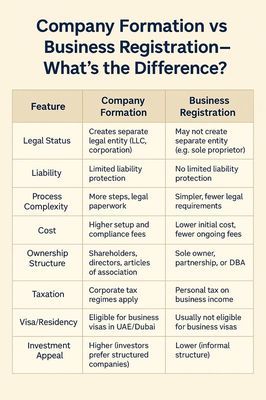
Select the right business structure based on your goals, tax situation, and whether you will operate locally or internationally.
International Business Company (IBC)
- 0% tax on foreign income
- No minimum capital
- 48-72 hour registration
- No exchange controls
- Cannot trade locally in St. Lucia
Local Company (Ltd by Shares)
- Can trade locally
- 30% corporate tax
- 6-10 day registration
- Eligible for tax holidays
- Can own St. Lucian property
Branch / External Company
- Extension of parent company
- Parent remains liable
- Must register with ROCIP
- Taxed on local income at 30%
- Simpler than forming new entity
Engage Local Professionals
Hire a Saint Lucian attorney, accountant, and (for IBCs) a licensed registered agent. A local lawyer is essential for navigating regulations, filing documents, and ensuring compliance.
Key Professionals Needed
Attorney-at-Law — Required for statutory declarations and filings. Chartered Accountant — Tax registration, bookkeeping setup, annual returns. Registered Agent (IBC only) — Must be licensed in St. Lucia; maintains registered office. See the Business Directory for listings.
Prepare Required Documents
Gather, notarize, and apostille all required personal and corporate documents. Processing times for certifications vary by country.
Phase 2: Registration
Incorporate your company and obtain all required registrations
Name Search & Approval
Submit Form 26 (Request for Name Search and Name Reservation) to the Registry of Companies and Intellectual Property (ROCIP). The proposed name must not duplicate or closely resemble an existing registered entity. For IBCs, submit via the IFC registry.
File Incorporation Documents
Prepare and file the following with the Registry:
| Form | Description | Notes |
|---|---|---|
| Form 1 | Articles of Incorporation | Sets out company name, share structure, restrictions |
| Form 9 | Notice of Directors | Names, addresses, and nationalities of all directors |
| Form 4 | Notice of Registered Office | Physical address in Saint Lucia |
| Statutory Decl. | Declaration by Attorney-at-Law | Requires EC $2.50 stamp |
Obtain Certificate of Incorporation
Once documents are processed and approved, the Registry issues a Certificate of Incorporation. This is your company's birth certificate and proof of legal existence.
Apply for Tax Identification Number (TIN)
Register with the Inland Revenue Department (IRD) to obtain a TIN. Required for all tax filings, VAT registration, and opening a bank account. Bring your Certificate of Incorporation and directors' ID.
Register for VAT (if applicable)
If your expected annual turnover exceeds XCD $400,000 (approx. USD $148,000), VAT registration is mandatory. Standard rate is 12.5%; tourism accommodation services 7%; hotel food/beverage and related tourism services 10%. You may also register voluntarily below the threshold.
Obtain Trade License
Apply to the relevant authority for your business sector. A general trade or business license is required for most commercial activities. Certain sectors (tourism, food & beverage, import/export) require additional sector-specific licenses.
Open a Corporate Bank Account
Open an account with a local commercial bank. Major banks include Bank of Saint Lucia, First Caribbean International Bank (CIBC), Republic Bank, and 1st National Bank. IBCs may also use international banking partners.
Documents Typically Required
Certificate of Incorporation, Articles of Incorporation, Board Resolution authorizing account opening, Directors' certified ID and proof of address, TIN, source of funds documentation. Allow extra time for enhanced due diligence on non-resident accounts.
Phase 3: Post-Registration
Set up operations, hire staff, and ensure ongoing compliance

Set Up Accounting & Bookkeeping
Engage a local chartered accountant or accounting firm to establish your bookkeeping system, chart of accounts, and financial reporting processes. Saint Lucia uses IFRS for SMEs. IBCs must file unaudited annual financial statements.
Register with the National Insurance Corporation (NIC)
Mandatory if you have employees. Register as an employer and obtain an NIC employer number. Both employer (5%) and employee (5%) contributions are required on earnings up to a ceiling. Total NIC contribution rate: 10%.
Hire Staff / Apply for Work Permits
For local hires, ensure compliance with the Labour Act (minimum wage, working hours, leave entitlements). For foreign workers, the employer must apply for a work permit through the Ministry of Labour, demonstrating that no suitable local candidate is available.
Obtain Sector-Specific Licenses
Depending on your industry, you may need additional licenses or permits. Common examples include:
| Sector | License Required | Issuing Authority |
|---|---|---|
| Tourism / Hotels | Hotel License, Tourism Operator License | Ministry of Tourism / SLTA |
| Food & Beverage | Food Handler's Permit, Liquor License | Environmental Health / Magistrate Court |
| Construction | Building Permit, Contractor License | Development Control Authority |
| Import / Export | Customs License, Import Permit | Customs & Excise Dept. |
| Financial Services | FSRA License | Financial Services Regulatory Authority |
| Telecommunications | Telecom License | NTRC (National Telecom Regulatory Commission) |
Set Up Office / Business Premises
Secure commercial space through lease or purchase. Key business areas include Castries (capital, government offices), Rodney Bay (tourism hub), and Vieux Fort (near Hewanorra International Airport / Free Zone). Ensure premises comply with zoning and fire safety regulations.
Arrange Business Insurance
While not always legally mandated, business insurance is strongly recommended and often required by landlords and lenders. Key coverage types: property insurance (hurricanes, fire), public liability, employer's liability, professional indemnity, and motor vehicle insurance (mandatory for company vehicles).
Phase 4: For Property Investors
Additional steps for purchasing real estate in Saint Lucia
Non-Citizens Must Obtain an Alien Landholding License
Under the Alien Landholding Act, all non-nationals of Saint Lucia (including CARICOM nationals for commercial land) must obtain a license before purchasing property. This requirement is waived for CBI real estate purchases through approved projects.
Apply for Alien Landholding License
Submit an application to the Ministry of Physical Development, Housing and Urban Renewal. Include: completed application form, passport copies, police clearance, details of the property (survey plan, valuation), and the purpose of purchase. A fee based on property value is payable.
Property Purchase Process
Once the Alien Landholding License is granted, proceed with the purchase. Engage a local attorney to conduct title searches, review the deed of sale, and handle the conveyancing process. Typically involves:
- 1. Sign preliminary agreement (sale and purchase agreement)
- 2. Attorney conducts title search at the Land Registry
- 3. Satisfy any conditions (survey, valuation, financing)
- 4. Execute the Deed of Sale before a Notary Royal
- 5. Register the deed at the Land Registry
Pay Transfer Tax & Stamp Duty
Upon completion of the property transfer, the following taxes and duties apply:
| Tax / Duty | Rate | Paid By |
|---|---|---|
| Transfer Tax (Vendor) | 2.5% of market value | Seller |
| Transfer Tax (Purchaser) | 2.0% of market value | Buyer |
| Stamp Duty | 2.0% of market value | Buyer |
| VAT on Commercial Property | 12.5% (if applicable) | Buyer |
| Registration Fees | Approx. EC $100 - $300 | Buyer |
Engage Surveyor & Valuer
Hire a licensed land surveyor to verify boundaries and prepare a survey plan. Engage a certified property valuer for an independent market valuation, which is often required by banks for mortgage financing and by the Inland Revenue for assessing transfer tax.
Phase 5: For CBI Applicants
Citizenship by Investment programme checklist
Citizenship by Investment — Quick Facts
4 investment routes from USD $240,000. Visa-free travel to 145+ countries. No residency requirement (30-day minimum under development). 6–12 month processing. ePassport available from August 2025 (10-year validity for adults, 5 years for minors). Sovereign Wealth Fund approved February 2025 to manage CBI proceeds. Full details on the CBI page.
Choose Your Investment Route
Decide between the four qualifying investment options based on your budget, goals, and family situation.
| Route | Minimum | Refundable? | Best For |
|---|---|---|---|
| National Economic Fund (NEF) | USD $240,000 | No (donation) | Lowest cost, fastest, no management burden |
| Real Estate | USD $300,000 | Yes (resale after 5 years) | Asset retention, rental income. Note: only A’ILA (Canelles Resort) is currently active as a CBI-approved project. |
| Government Bonds | USD $300,000 | Yes (after 5 years, 0% interest) | Capital preservation (no interest) |
| Enterprise Project | USD $3,500,000 | Business investment | Large-scale investors, job creation |
Engage a CIU-Authorized Agent
All CBI applications must be submitted through a licensed authorized agent. This is typically a law firm or specialist service provider licensed by the Citizenship by Investment Unit (CIU). The agent manages the entire application process, prepares documents, and liaises with the CIU on your behalf.
Prepare CBI Documentation
Compile a comprehensive documentation package for the main applicant and all dependents. All documents must be certified, notarized, and (where required) apostilled.
Application Submission & Due Diligence
Your authorized agent submits the completed application to the CIU along with the application, processing, and due diligence fees. The CIU conducts thorough international background checks covering criminal history, financial integrity, security, and source of funds.
Approval, Investment & Citizenship
Upon approval in principle, you will be notified to complete the qualifying investment within a set period. Once the investment is confirmed by the CIU, the Certificate of Registration as a Citizen is issued, followed by passport application and issuance.
Timeline Summary
Total process: 6–12 months from submission to passport. ePassport (biometric) issued from August 2025: 10-year validity for adults, 5 years for minors. Mandatory interview (virtual or in-person) for all applicants aged 16+ since Sept 2023. Dual citizenship is permitted. A Sovereign Wealth Fund (approved Feb 2025) manages CBI proceeds for national development.
Cost Summary: What to Budget
| Item | Local Company | IBC | Notes |
|---|---|---|---|
| Name reservation | EC $50 | Included | Form 26 |
| Incorporation filing | EC $850 | USD $400-$600 | Government fees |
| Registered agent (annual) | N/A | USD $800-$2,000 | IBC requirement |
| Attorney fees | USD $1,000-$3,000 | USD $1,500-$4,000 | Incorporation only |
| Accounting setup | USD $500-$1,500 | USD $500-$1,500 | Initial setup |
| Annual return filing | EC $250-$500 | USD $300-$500 | Required annually |
| Trade license | EC $100-$2,000 | N/A | Varies by sector |
| Work permit (per person) | EC $500-$2,500 | For foreign employees | |
| Estimated Total (Setup) | USD $2,000-$6,000 | USD $3,000-$8,000 | Excluding premises & insurance |
Currency Note
The Eastern Caribbean Dollar (XCD) is pegged to the US Dollar at XCD 2.70 = USD 1.00. Government fees are typically quoted in XCD; professional fees are often quoted in USD for international clients.
Timeline Overview
Weeks 1-4: Pre-Investment Phase
Research the market, choose entity type, engage professionals (lawyer, accountant, registered agent), and begin gathering documents. Start notarization and apostille process for international documents.
Weeks 4-6: Name Search & Filing
Submit name reservation (Form 26), prepare incorporation documents (Forms 1, 4, 9), and file with the Registry. Pay prescribed fees.
Weeks 6-8: Certificate & Tax Registration
Receive Certificate of Incorporation (6-10 days for local, 48-72 hours for IBC). Immediately apply for TIN and VAT registration (if applicable).
Weeks 8-10: Banking & Licensing
Open corporate bank account with required documents. Apply for trade license and any sector-specific permits.
Weeks 10-12+: Operations Setup
Set up accounting system, register with NIC, secure premises, arrange insurance, hire staff (apply for work permits if needed). Begin operations.
Fast Track for IBCs
An IBC can be fully incorporated in 48-72 hours with a registered agent. If using a shelf company, incorporation is effectively immediate. The total setup timeline for an IBC (incorporation + bank account) can be as short as 2-4 weeks.
Important Reminders
Verify Before You Act
This checklist is a research-based guide. Fees, timelines, and requirements may change. Always verify current requirements directly with the relevant government authority or through your local attorney before making financial commitments.
Invest Saint Lucia
The national investment promotion agency (investstlucia.com) provides free one-stop-shop support for investors, including assistance with permits, licenses, incentive applications, and introductions to local partners.
Use the Full Guide
This checklist complements the detailed pages of the St. Lucia Business Guide. See Business Setup for entity details, Legal & Tax for regulations, CBI for citizenship by investment, and the Directory for professional contacts.
Anti-Money Laundering
Saint Lucia enforces strict AML/CFT regulations. All financial institutions and registered agents conduct enhanced due diligence. Ensure your source of funds is well-documented and transparent. Non-compliance can result in delays or rejection.