Market Overview
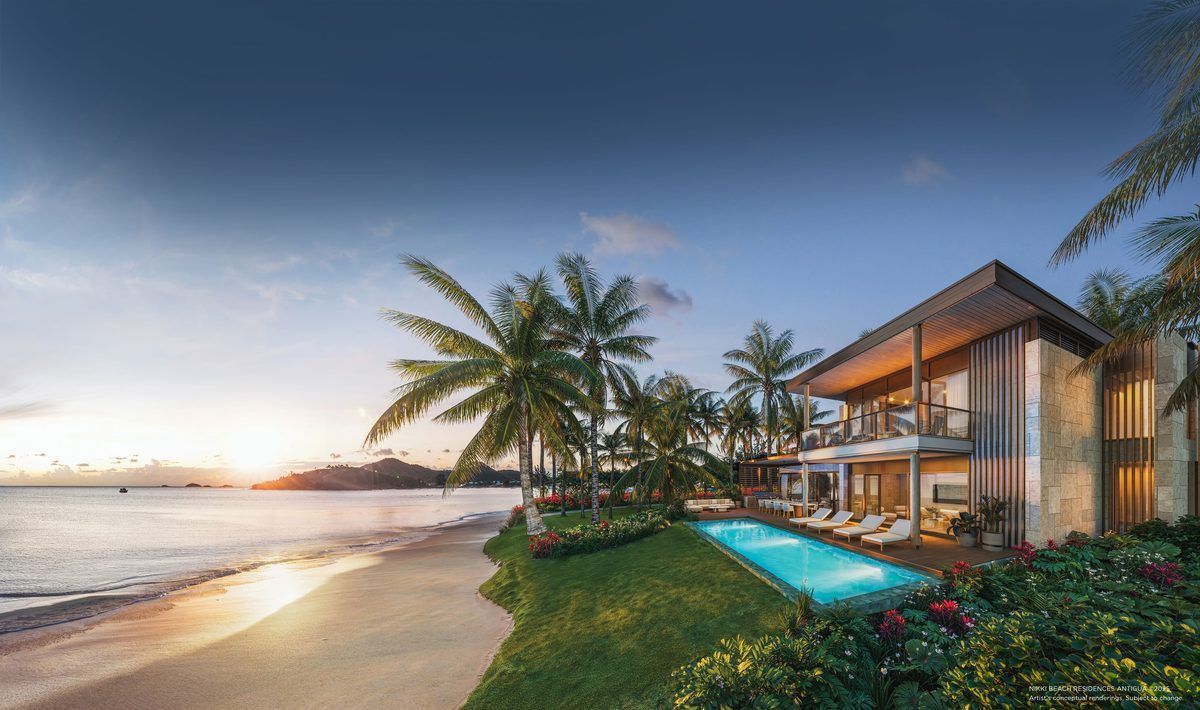

Saint Lucia's real estate market offers compelling opportunities for international investors, driven by strong tourism arrivals, a stable currency (XCD pegged to USD at 2.70:1), and no capital gains tax. The island attracts buyers ranging from retirees and digital nomads seeking a Caribbean lifestyle to institutional investors developing luxury resort properties.
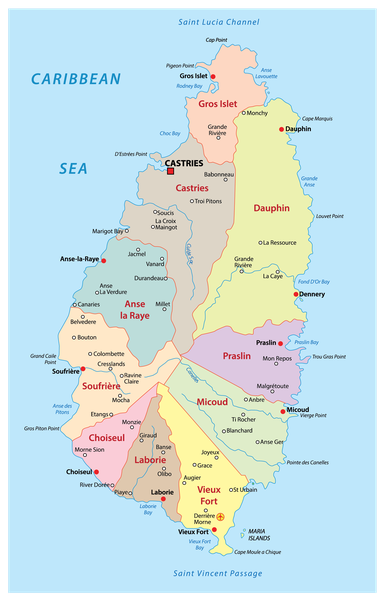
Key investment areas include the northwest coast (Rodney Bay, Cap Estate, Gros Islet), the picturesque Marigot Bay, and the dramatic Soufriere area near the Pitons. The south (Vieux Fort) is an emerging market driven by the Hewanorra Airport expansion and the A'ILA mega-resort development.
Why Invest in Saint Lucia Real Estate?
- No capital gains tax, no inheritance tax, no wealth tax
- Stable currency pegged to the US dollar since 1976
- Freehold ownership available to foreigners (with ALHL)
- CBI route: buy approved property, gain citizenship and a passport
- Strong tourism demand supporting vacation rental income
- English-speaking, common law legal system (based on English law)
- Year-round tropical climate attracting international visitors
Property Ownership Types
Saint Lucia recognizes several forms of property ownership. The legal framework is based on English common law, supplemented by the Land Registration Act (Cap. 5.01) and the Condominium Act (Cap. 5.05).
| Ownership Type | Description | Key Features |
|---|---|---|
| Freehold | Outright ownership of land and buildings in perpetuity | Most common for villas and houses. Full ownership of land and structure. Can be sold, transferred, inherited. No time limit. Most developments (The Landings, Cas en Bas) sell freehold. |
| Leasehold | Right to use land/property for a fixed term (typically 50–99 years) | Common for government-owned land and some resort developments. Lease terms vary. Ground rent payable to freeholder. Leasehold can be mortgaged and transferred. Less common than freehold in Saint Lucia. |
| Condominium / Strata Title | Individual ownership of a unit within a multi-unit building, plus shared ownership of common areas | Governed by the Condominium Act (Cap. 5.05). Each unit has a defined "unit entitlement" determining share of common areas. Body corporate manages shared spaces. Annual strata/service fees apply. Used for apartment complexes and resort condos. |
| Fractional Ownership | Shared ownership of a property among multiple buyers (typically 4–12 owners) | Common in luxury resort developments. Each owner holds a deeded fraction. Usage rights allocated by schedule. Lower entry cost than full ownership. Used in A'ILA Resorts CBI programme (from $300K). |
Land Registration System
Saint Lucia operates a Torrens-style land registration system under the Land Registration Act. The Registrar of Lands maintains a central register and issues Certificates of Title. All land transactions must be registered. The system provides a government-backed guarantee of title, offering strong protection for buyers.
Alien Landholding License (ALHL)
Under the Aliens (Licensing) Act, all non-citizens of Saint Lucia must obtain an Alien Landholding License before purchasing property. This is a mandatory legal requirement—no property transfer to a foreigner can be registered without it.
CBI Exception
Buyers investing in CBI-approved real estate (minimum USD $300,000) do not need an ALHL. The CBI process grants citizenship, making the buyer a national. CIP investors are also exempt from stamp duty and the Alien Landholding Licence requirement, saving approximately 12% in transaction costs. See CBI Real Estate for details.
Step-by-Step ALHL Process
Step 1: Engage a Local Attorney
Hire a licensed Saint Lucian attorney to handle the ALHL application, title search, and conveyancing. Attorney fees for the full purchase process typically range from 1.5–3% of the purchase price. The attorney will conduct a preliminary title search to confirm the property is free of encumbrances.
Step 2: Obtain Certificate of Eligibility
Apply to the Citizenship by Investment Unit (CIU) for a Certificate of Eligibility, which pre-qualifies you for the ALHL. This is a preliminary screening. The certificate must be renewed as long as the foreigner owns property in Saint Lucia. Fees:
- 1-year certificate: EC$3,000 (~US$1,111)
- 10-year certificate: EC$10,000 (~US$3,704)
Step 3: Sign Sale Agreement & Pay Deposit
Enter into a conditional sale agreement with the seller. Pay a 10% deposit (held in escrow by your attorney), conditional on ALHL approval. The agreement should include a clause allowing you to withdraw if the ALHL is denied.
Step 4: Submit ALHL Application
Your attorney submits the ALHL application to the Ministry of Physical Development (or Ministry of Agriculture and Lands). Required documents:
- Passport copies (certified)
- Birth certificate
- Police clearance certificate
- Banker's reference letter
- Land survey plan
- Draft sale agreement
- Proof of source of funds
Step 5: License Fee Payment
Pay the ALHL fee based on property size:
- Properties under 1 acre: EC$5,000 (~US$1,852)
- Properties over 1 acre: EC$10,020 (~US$3,711)
A non-refundable application fee of EC$1,500 (~US$556) is also payable upon submission.
Step 6: Approval & Issuance
Processing typically takes 6–8 weeks (some cases up to 3 months). Properties over 1 acre require Cabinet approval, which may extend the timeline further. The license, once granted, is permanent, property-specific, and non-transferable—it does not need to be renewed.
ALHL Fee Schedule
| Property Size | License Fee (USD) | License Fee (XCD) |
|---|---|---|
| Up to 1 acre | $2,500 | $6,750 |
| 1–5 acres | $5,000 | $13,500 |
| 5–10 acres | $10,500 | $28,350 |
| Over 10 acres | $10,500+ | $28,350+ |
| Application fee (non-refundable) | $556 | $1,500 |
Foreign Ownership Restrictions
- There are no restrictions on what foreigners can own once the ALHL is granted—residential, commercial, agricultural, or vacant land
- Properties over 1 acre require additional Cabinet approval
- CARICOM nationals have reciprocal rights and may face a simpler process
- The license is specific to the property described in the application—a new license is needed for each additional property
- Companies incorporated in Saint Lucia with foreign shareholders must also obtain an ALHL
- Security Interest in Movable Property Amendment Bill 2025: clarified that the 2022 Act applies only to movable (personal) property, not real estate—ALHL remains the governing framework for foreign land ownership
Property Purchase Process
Conveyancing Process (Typical Timeline: 3–6 Months)
1. Property Search & Viewing
Engage a licensed real estate agent. Agent commission is typically 5–6% of the sale price (usually paid by the seller). View properties and identify your target. Due diligence includes checking flood zones, coastal setbacks, and zoning restrictions.
2. Title Search
Your attorney conducts a title search at the Land Registry to verify clear title, check for encumbrances (mortgages, liens, caveats, easements), and confirm the seller's ownership. Saint Lucia uses a Torrens title registration system with government-guaranteed titles, providing strong buyer protection.
3. Make Offer & Negotiate
Submit an offer through your agent or attorney. Negotiate price and terms. There is no standard "asking price reduction"—the market varies by area and property type.
4. Sale Agreement & Deposit
Sign a Sale and Purchase Agreement prepared by the attorneys. Pay 10% deposit (held in escrow). Agreement is conditional on ALHL approval and clear title. Include a property survey clause if boundaries are unclear.
5. ALHL Application
Apply for the Alien Landholding License (see detailed ALHL section above). Processing: 4–8 weeks.
6. Property Survey
Commission a licensed surveyor to confirm boundaries and prepare a survey plan. Required for the ALHL application and deed registration. Cost: XCD $1,500–$5,000 depending on property size and terrain.
7. Completion & Transfer
Once ALHL is granted: pay the balance of the purchase price, sign the Deed of Sale (prepared by attorney), pay stamp duty and registration fees, and register the transfer at the Land Registry. The new Certificate of Title is issued in your name.
Important Notes on Conveyancing
- Electronic signatures are NOT valid for real estate transactions in Saint Lucia (excluded under the Electronic Transactions Act 2011)
- Both buyer and seller should have independent legal representation
- All funds must be transferred through a local bank or attorney's escrow account
- Power of Attorney is permitted if you cannot be present for signing
- Ensure the property has valid planning permission for its current use
Transaction Costs Breakdown
Resident vs. Non-Resident Comparison
| Cost Item | Resident | Non-Resident | Notes |
|---|---|---|---|
| Stamp Duty (buyer) | 2% | 2% | Payable on registration of deed of sale |
| Transfer Tax (seller) | 5% | 10% | Non-residents pay double the resident rate (Vendor's Tax) |
| Legal Fees | 0.5–2.5% | 0.5–2.5% | Buyer's attorney + seller's attorney; scale-based on property value |
| Annual Property Tax (residential) | 0.25% | 0.25% | Of open market value, assessed by Inland Revenue |
| Annual Property Tax (commercial) | 0.4% | 0.4% | Of open market value |
CIP Investor Tax Exemptions
CBI/CIP investors purchasing approved real estate are exempt from both stamp duty and transfer tax, saving approximately 12% in combined transaction costs (2% buyer stamp duty + 10% non-resident transfer tax). This is a significant financial advantage over the standard ALHL purchase route, in addition to the ALHL exemption itself.
Full Buyer Cost Breakdown
| Cost Item | Paid By | Rate / Amount | Notes |
|---|---|---|---|
| Stamp Duty (Buyer) | Buyer | 2% of property value | Payable on registration of deed of sale |
| Transfer Tax (Seller—Resident) | Seller | 5% of property value | Standard resident seller rate |
| Transfer Tax (Seller—Non-Resident) | Seller | 10% of property value | Flat rate for non-resident sellers (Vendor's Tax) |
| Legal Fees (Buyer's Attorney) | Buyer | 1.5–3% of purchase price | Plus XCD $100 flat fee; scale-based on property value |
| Legal Fees (Seller's Attorney) | Seller | 1–2% of purchase price | For deed preparation and conveyancing |
| Real Estate Agent Commission | Seller (typically) | 5–6% of sale price | Negotiable; some agents charge buyer commission on rentals |
| ALHL Fee | Buyer | $2,500–$10,500 USD | Based on property size (see ALHL section) |
| Certificate of Eligibility | Buyer | $3,000–$10,000 USD | 1-year or 10-year validity |
| Mortgage Stamp Duty | Buyer | 1–1.2% | Applicable if financing with a mortgage |
| Land Survey | Buyer | XCD $1,500–$5,000 | Required for ALHL and deed registration |
| Registration Fee | Buyer | XCD $100–$500 | Land Registry recording fee |
Example: Total Buyer Costs on a USD $500,000 Property (Under 1 Acre)
| Purchase price | $500,000 |
| Stamp duty (buyer, 2%) | $10,000 |
| Legal fees (buyer, ~2%) | $10,000 |
| ALHL fee (under 1 acre) | $2,500 |
| ALHL application fee | $556 |
| Certificate of Eligibility (1-year) | $3,000 |
| Survey | $1,000 |
| Registration | $200 |
| Total buyer costs | ~$527,256 |
| Closing costs as % of price | ~5.5% |
When Selling as a Non-Resident
Non-resident sellers pay a 10% transfer tax (Vendor's Tax) on the sale price—significantly higher than the 5% paid by residents. If you plan to sell in the future, consider whether obtaining residency or citizenship (via CBI) would reduce your tax liability. There is no capital gains tax in Saint Lucia, which partially offsets the higher vendor's tax.
Annual Property Taxes
| Tax Type | Rate | Basis | Payment |
|---|---|---|---|
| Residential property tax | 0.25% per year | Open market value (assessed by Inland Revenue) | Due within 30 days of assessment notice |
| Commercial property tax | 0.40% per year | Open market value | Due within 30 days of assessment notice |
| Vacant land tax | 0.25% per year | Open market value | Due within 30 days of assessment notice |
Very Low Property Taxes by International Standards
A USD $500,000 residential property pays approximately USD $1,250 per year in property tax (0.25%). By comparison, a similar property in the US might pay $5,000–$15,000 annually. There is no inheritance tax, wealth tax, or capital gains tax. Rental income is taxable as regular income if you are tax-resident in Saint Lucia.
Property Prices by Type & Area

Residential Property Prices (2025–2026)
| Property Type | Price Range (USD) | Price Range (XCD) |
|---|---|---|
| Small starter home (rural) | $150,000+ | $405,000+ |
| Homes in nature (hillside/rural) | From $200,000 | From $540,000 |
| 2-bed condo (entry-level) | $200,000–$300,000 | $540,000–$810,000 |
| Modern condos/bungalows (Rodney Bay, Gros Islet) | From $300,000 | From $810,000 |
| 3-bed villa (mid-range) | $400,000–$500,000 | $1,080,000–$1,350,000 |
| Waterfront townhouse | $650,000–$700,000 | $1,755,000–$1,890,000 |
| Premium luxury (The Landings) | $850,000–$2,000,000 | $2,295,000–$5,400,000 |
| Branded resort residence (Cas en Bas) | $395,000–$900,000+ | $1,066,500–$2,430,000+ |
| Luxury villa (Cap Estate / Cabot) | $1,000,000–$12,000,000+ | $2,700,000–$32,400,000+ |
| Ultra-luxury estate (beachfront) | $3,000,000–$10,000,000+ | $8,100,000–$27,000,000+ |
| Price per sqm (Caribbean benchmark) | $5,000–$8,000 | $13,500–$21,600 |
Land Prices by Area (Per ft², 2025)
| Location | USD / ft² | XCD / ft² | Character & Notes |
|---|---|---|---|
| Rodney Bay | $10–$200 | $27–$540 | Premium commercial & beachfront at top end; marina, restaurants, nightlife. Highest price ceiling on the island. |
| Castries | $4–$200 | $11–$540 | Capital city; wide range from hillside residential to prime harbour-front commercial |
| Cap Estate | $8–$30 | $22–$81 | Prestige residential; Cabot golf courses, gated communities, ocean views |
| Marigot Bay | $7.50–$35 | $20–$95 | Marina & boutique appeal; yachting, waterfront dining |
| Soufriere | $6–$20 | $16–$54 | Pitons proximity; eco-tourism, boutique resorts, UNESCO heritage area |
| Laborie | $6–$10 | $16–$27 | Quiet south coast fishing village; affordable entry point |
| Vieux Fort | $4–$12 | $11–$32 | Airport area, emerging; Hewanorra expansion & Pearl of the Caribbean driving growth |
| Dennery (East Coast) | $4–$6 | $11–$16 | Atlantic coast; rural, undeveloped, affordable |
| Choiseul | $2.80–$8 | $8–$22 | Rural southwest; arts & crafts heritage, lowest prices on-island |
| Monchy (Rural) | $3–$8 | $8–$22 | Inland; agricultural, budget-friendly |
Rental Yields by Area
| Area | Gross Yield (Annual Avg) | High Season Yield | Occupancy (Est.) | Notes |
|---|---|---|---|---|
| Rodney Bay / Gros Islet | 5–7% | 8–10% | 65–80% | Highest demand; beach proximity, restaurants, marina. Best for short-term vacation rentals. |
| Cap Estate | 4–6% | 7–9% | 55–70% | Premium villas command high nightly rates. Lower occupancy but higher per-night revenue. Cabot golf course driving demand. |
| Marigot Bay | 4–7% | 8–10% | 55–70% | Popular with yachting crowd. Strong seasonal demand. Limited inventory supports pricing. |
| Soufriere | 3–5% | 6–8% | 45–65% | Pitons views premium. Eco-tourism appeal. More seasonal—lower off-season occupancy. |
| Vieux Fort | 3–5% | 5–7% | 40–55% | Emerging market. Airport proximity. A'ILA project expected to transform area by 2027. |
Seasonality in Rental Income
High season: December–April (peak: Christmas/New Year and February half-term). Nightly rates can be 2–3x higher than low season. Low season: June–November (hurricane season). Budget for 30–50% lower occupancy during these months. Standard annual yields of 2–5% for long-term rentals; vacation rentals can achieve 9–10% gross yields in high season for well-located, well-managed properties. Branded residences (Cas en Bas/Hyatt, The Landings) offer guaranteed rental return programmes of 6–10%.
Rental Income Taxation
Rental income earned in Saint Lucia is subject to income tax at standard personal or corporate rates (up to 30%). Non-residents are taxed on Saint Lucia-sourced income. A Tourism Levy of US $3–$6 per person per night applies to short-term accommodation. VAT at 7% applies to tourism accommodation services. Consult a local tax advisor for structuring rental income efficiently.
Short-Term Rentals & Airbnb
Short-term vacation rentals have grown significantly in Saint Lucia. Airbnb listings grew from 62 to 223 between 2017 and 2024, with 80% rated 4.5 stars or higher. Gross rental yields for short-term properties typically range from 3.5–5.25%, depending on location, property quality, and management.
Regulatory Requirements
- There is no specific Airbnb licensing law in Saint Lucia
- Operators must register with the Saint Lucia Tourism Authority (SLTA) under the Tourism Levy Act 2020
- Rental income is subject to standard income tax (up to 30%)
- VAT at 7% applies to tourism accommodation services (if turnover exceeds XCD $400,000/year)
Tourism Levy Rates
| Category | Rate (per person, per night) |
|---|---|
| Average Daily Rate (ADR) ≤ US$120 | US$3 |
| Average Daily Rate (ADR) > US$120 | US$6 |
| Children aged 12–17 | 50% of applicable rate |
| Children under 12 | Exempt |
Practical Tips for Airbnb Hosts
- Register with SLTA before listing your property—non-compliance may result in penalties
- Factor in tourism levy, VAT (if applicable), management fees (15–25%), and seasonal vacancy into your yield projections
- Properties with reliable internet (Starlink/fiber), AC, and a pool command significantly higher nightly rates
- Peak season (Dec–Apr) nightly rates can be 2–3x higher than low season (Jun–Nov)
- A local property manager is essential for guest check-ins, cleaning, and maintenance
Key Real Estate Developments
The following are major residential and resort developments in Saint Lucia as of 2025–2026. These are not all CBI-approved—most are independent developments where purchases require an ALHL. The island’s development pipeline totals approximately ~2,000 new hotel rooms across all active projects and renovations.
Opened 2025
| Development | Location | Type & Size | Price Range (USD) | Status |
|---|---|---|---|---|
| Secrets St. Lucia Resort & Spa Hyatt Inclusive Collection. Adults-only all-inclusive. |
Choc Beach (northwest coast) | 355-room all-inclusive resort. Former St. James Club Morgan Bay site. Multiple restaurants, spa, pools, water sports. | Hotel only (not residential sales) | Opened June 2025 Hyatt-branded. Major new tourism anchor on northwest coast. |
| Cas en Bas Beach Resort Destination by Hyatt. 90 suites. Freehold branded residences. |
Cap Estate (north) | 90 contemporary suites: studio, 1-bed, 2-bed. Managed by Hyatt. Near Cabot golf course. | $395,000–$900,000+ | Opened 2025 Phase 1 sold out. Phase 2 ~80% sold. Guaranteed yields 6–10%. |
Opening 2026
| Development | Location | Type & Size | Price Range (USD) | Status |
|---|---|---|---|---|
| Courtyard by Marriott First Marriott-branded hotel in Saint Lucia. |
Pointe Seraphine, Castries | 140-room hotel at the cruise port area. Business and leisure traveller focus. | Hotel only (not residential sales) | Opening 2026 |
| Sapphire Sands Villas Bay Gardens group. Boutique villa retreat. |
Reduit Beach, Rodney Bay | 9 luxury villas: double, king, 1–3 bed units, all with kitchens. 6-room spa, fitness centre, butler service. Directly on Reduit Beach with Pigeon Island views. | Enquiry pricing | Opening February 2026 |
| A'ILA Phase 2 (A'ila Palm) CBI-approved. Atlas Group / Global Capital Caribbean. |
Mount Pimard, Rodney Bay | 153 hotel rooms + Blue Zones Shopping Center + spa. Part of the $870M–$1.3B A'ILA mega-resort. | $300,000 (fractional/CBI) / $600,000+ (full) | Under Construction — 2026 Target |
Major Renovations & Expansions
| Development | Location | Investment | Details |
|---|---|---|---|
| Coconut Bay Beach Resort | Vieux Fort | US$80M expansion + US$24M renovation | Major expansion and complete renovation of existing property. South coast's largest resort investment. |
| Windjammer Landing | Labrelotte Bay | US$40M renovation | Comprehensive renovation of the established villa resort. |
Established & Active Developments
| Development | Location | Type & Size | Price Range (USD) | Status |
|---|---|---|---|---|
| Cabot Saint Lucia Luxury golf & residential community. |
Cap Estate (375-acre peninsula) | Point Villas (3–5+ bed, cliffside pools). Horizon Villas (4-bed, from $5.6M). Fairway Residences ($3M–$5M). Villas priced US$5.6M–$12M in the ultra-luxury segment. Point Hardy Golf Club open (ranked #76 in the world, GOLF Magazine Top 100). Permanent clubhouse completing 2026: three levels—bar/terrace, restaurant/changing rooms, entertainment (bowling, golf simulators, theatre). Short Course (Trevor Dormer design) planned. | $5,600,000–$12,000,000+ | Active — Multiple Phases Golf course open Dec 2023 (ranked #76 globally). Clubhouse 2026. 320 homes planned. Beach club, spa, 3 restaurants, 40-suite boutique hotel. Defining the ultra-luxury segment in the Caribbean. |
| The Landings Resort & Spa Freehold. Private marina. |
Rodney Bay / Pigeon Island Causeway | 2–3 bed waterfront condos with marina. 143 built + 21 final units (Beachfront Homes & Marina Residences). | $575,000–$2,250,000 | Active — Final Collection Selling |
| Harbor Club Curio Collection by Hilton. |
Gros Islet / Rodney Bay Marina | 115-room luxury boutique hotel. 4 pools, full-service spa, 5 restaurants. Marina & mountain views. | Hotel only (not residential sales) | Operational |
| Sugar Beach, A Viceroy Resort Luxury resort between the Pitons. |
Soufriere (UNESCO Pitons area) | 96 rooms/villas/residences. Three 4-bedroom beachfront residences (372 sqm each). "Spice of Life" 9-bed estate.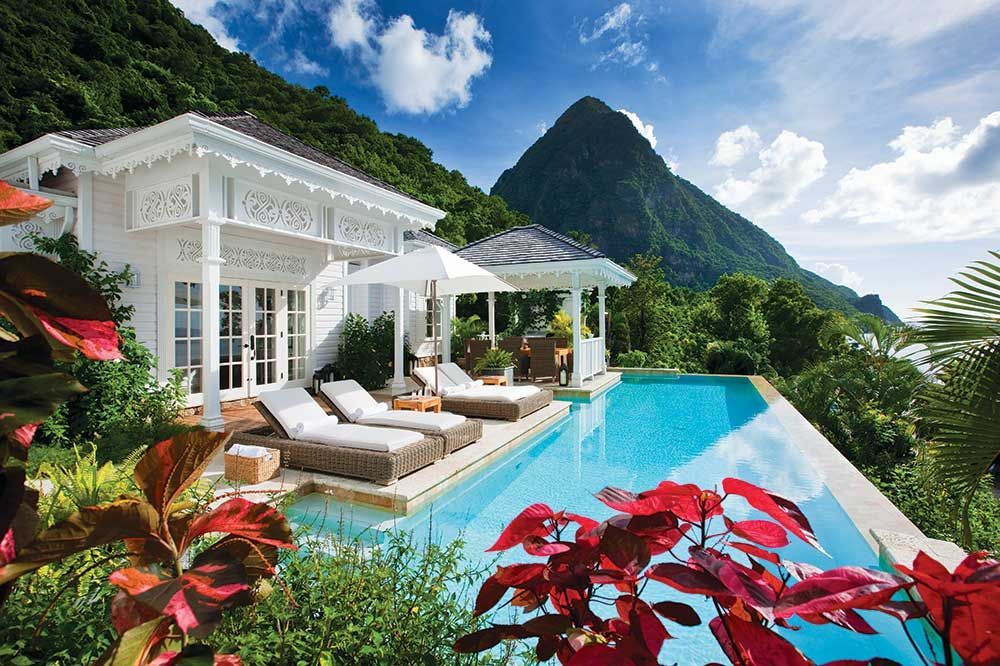 |
Residences: $6,700–$25,000/night (rental programme) Purchase: enquiry only, $5M+ range |
Operational — Iconic Luxury |
| Marigot Bay Resort & Marina Capella destination. |
Marigot Bay | 124 rooms & suites + residences. Full-service marina (33 berths). Spa, restaurants, water taxi. | Condos & villas from $450,000+ | Operational |
Future / Long-Horizon Projects
| Development | Location | Type & Size | Investment | Timeline |
|---|---|---|---|---|
| A'ILA Full Build-Out (Phase 3) CBI-approved. Global Capital Caribbean. |
Mount Pimard, Rodney Bay | A'ila Cove 320 hotel rooms + Sunset Residences 312 residential units + 90 villas + Zenith Conference Center + 21 restaurants + marina | $870M–$1.3B total project | 2027 target Phase 1 (TheLifeCo 65 rooms) opened summer 2025. Phase 2 (153 rooms) 2026. See CBI section. |
| Pearl of the Caribbean Developer: Desert Star Holdings (DSH). |
Vieux Fort | Mega-resort vision: hotels, horse racing facility (operational), commercial, and residential components | US$2.6B (total vision) | 15-Year Phased / Limited Progress Horse track operational. Hotel and broader development has seen limited advancement. Verify current status. |
CBI-Approved Real Estate Projects
The following projects have been approved by the Citizenship by Investment Unit (CIU) for the CBI real estate route. Purchasing approved real estate (minimum USD $300,000) grants Saint Lucian citizenship without needing an ALHL. The 5-year holding period applies.
| Project | Location | Min. CBI Investment | Status (2025) |
|---|---|---|---|
| A'ILA Resorts, Villas & Residences Developer: Global Capital Caribbean LLC / Atlas Group. Total: $1.3B. |
Mount Pimard, Rodney Bay | $300,000 (fractional) / $600,000 (full) Projected 4% annual rental return |
Active — Only Active CBI Real Estate Project Phase 1 (TheLifeCo Wellness, 65 rooms) opened summer 2025. Phase 2 (A'ila Palm 153 rooms + Blue Zones Shopping Center + spa) 2026. Phase 3 (A'ila Cove 320 rooms + Sunset Residences 156 units + 90 villas + Zenith Conference Center) 2027. PM toured May 2025. Note: ongoing labour disputes reported on-site—monitor status. |
| Canelles Resort Developer: Caribbean Galaxy Real Estate Ltd. Managed by AMResorts. |
Anse Canelles, Micoud | $300,000 | Suspended / Under Legal Review RICO lawsuit filed 2024. Political controversy continues. Confirm status with CIU before investing. |
| Black Bay (formerly Alpina Saint Lucia) Developer: Desert Star Holdings (DSH). |
Vieux Fort | $200,000 (shared) / $300,000 (sole) | DEFUNCT Project has not progressed. Part of the wider Pearl of the Caribbean plan which has seen limited advancement beyond the horse track. No longer accepting CBI investors. |
CBI Real Estate: Critical Advice
- As of early 2026, A'ILA Resorts is the ONLY active CBI real estate project. Canelles is SUSPENDED (Caribbean Galaxy scandal). Black Bay is DEFUNCT.
- Previously discussed projects (Fairmont, Royalton) are not CBI-approved.
- Harbor Club, Sugar Beach, The Landings, and Cas en Bas are not CBI-approved—they are independent developments.
- The Saint Lucia government announced CBI programme reforms in March 2025, which may affect the approved project list.
- Always verify the current list at cipsaintlucia.com and use only CIU-authorized agents.
- CBI real estate has a 5-year holding period before resale. The next buyer may also qualify for CBI.
- No ALHL is required for CBI real estate purchases.
Construction Costs & Building Permits
Construction Costs (2025)
| Item | Cost (XCD) | Cost (USD) |
|---|---|---|
| Standard residential per ft² | $300 | ~$111 |
| Mid-range residential per ft² | $300–$400 | $111–$148 |
| Luxury residential per ft² | up to $450 | ~$167 |
| 5-star hotel construction per ft² | $675–$1,107 | $250–$410 |
| Concrete per cubic yard | $270–$360 | $100–$133 |
| Metal roofing per ft² | $12–$18 | $4.50–$6.70 |
| Basic interior finishes (whole house) | $30,000–$45,000 | $11,100–$16,700 |
| Luxury interior finishes | $90,000+ | $33,300+ |
| Skilled labour (daily rate) | $150–$200 | $56–$74 |
| Benchmark: 2,000 ft² 3-bed home (total) | $600,000–$1,300,000 | $222,000–$481,000 |
Professional Fees
| Architect / engineer | 5–10% of construction cost |
| Structural engineering | 2–4% of construction cost |
| General contractor fee | 10–20% of total project |
| Quantity surveyor | 2–3% of construction cost |
| Planning permission (DCA) | XCD $3,000–$7,500 ($1,100–$2,800 USD) |
Caribbean Construction Cost Context
Caribbean-wide construction costs have surged approximately 19% on average in recent years due to imported materials, shipping costs, and post-pandemic supply chain pressures. Saint Lucia's increase has been more moderate at approximately 14%, partly due to lower labour costs compared to larger islands. However, nearly all building materials are imported, making costs sensitive to global commodity and freight markets.
Building Permits & DCA Approval
All construction requires prior written permission from the Development Control Authority (DCA) under the Physical Planning and Development Act (2001). "Development" includes construction, demolition, change of use, subdivision, and material changes to land.
| Requirement | Detail |
|---|---|
| Decision timeline | 90 days from complete submission |
| Permission validity | 12 months to commence; 30 months to complete |
| Residential permit fees | From EC$20 |
| Commercial permit fees | EC$0.30 per ft² |
| Planning permission (total) | XCD $3,000–$7,500 ($1,100–$2,800 USD) |
| Coastal setback | 25–100 ft from high water mark (no construction) |
| EIA required for | Hotels, marinas, coastal developments, industrial plants, and other larger developments (mandatory for projects above defined thresholds) |
| Building code | OECS Building Code (2016); 150 mph wind resistance required |
| Unauthorized development penalty | Up to EC$10,000 + EC$250/day continuing |
| Stricter EIA penalties | Enhanced enforcement and penalties for non-compliance with environmental impact assessments |
| DCA contact | 1-758-468-4438 / 1-758-468-4452 |
Building Permit Process (Step by Step)
All construction in Saint Lucia requires prior written permission from the Development Control Authority (DCA), which falls under the Ministry of Planning and National Development. The governing law is the Physical Planning and Development Act 2001.
1. Engage a Licensed Architect / Engineer
Hire a licensed professional to prepare architectural drawings, structural plans, and site surveys. All plans must comply with zoning, building codes, and environmental standards.
2. Submit Application to DCA
Your architect submits the application with: architectural drawings, structural plans, site survey, and proof of land ownership. Foreign applicants must hold an approved Alien Landholding Licence before applying.
3. DCA Review & Public Notification
DCA reviews the application for compliance with zoning, building codes, and environmental standards. Major developments require a public notification period. Residential projects: 4–8 weeks for approval. Commercial/large-scale: 3–6 months.
4. Approval & Conditions
DCA issues approval or conditional approval. Permission is valid for 12 months to commence and 30 months to complete construction.
5. Construction Inspections
DCA conducts inspections at key stages: foundation, framing, and completion. Unauthorized development attracts penalties of up to EC$10,000 + EC$250/day continuing.
Building Codes & Standards
| Requirement | Detail |
|---|---|
| Building code | Saint Lucia national building code (OECS Building Code 2016 framework); 150 mph wind resistance required |
| Hurricane resilience | All structures must meet wind load standards for hurricane-prone regions; 2025 regulations emphasize energy efficiency |
| Seismic design | Seismic design requirements apply to all new construction |
| Coastal setback | 25–100 feet from high water mark (varies by area classification) |
| Permit fees | XCD $3,000–$7,500 (US$1,100–$2,800) depending on project size and classification |
| EIA required | Mandatory for large developments, coastal properties, and environmentally sensitive areas |
| UNESCO buffer zone | Development near Pitons Management Area subject to UNESCO buffer zone restrictions |
Foreign Investors: Construction Requirements
- Must first obtain an Alien Landholding Licence before purchasing land to build on
- Can hire local contractors or bring in specialized workers (work permits required for foreign workers)
- Environmental Impact Assessment (EIA) required for large developments, coastal properties, or environmentally sensitive areas
- Development near the Pitons Management Area is subject to UNESCO buffer zone restrictions (strict development moratorium since July 2010)
- All building materials are largely imported—factor in shipping delays and freight cost volatility
2025 Regulatory Update: Revised Land Development Regulations
Updated Land Development Regulations were published in November 2024 and took effect in 2025. Key changes include:
- Mandatory environmental assessments for larger developments, with expanded scope beyond the previous EIA triggers
- Climate resilience compliance requirements—new builds must demonstrate adaptation to increased hurricane intensity, sea level rise, and extreme weather events
- OECS Building Code enforcement: 150 mph wind resistance standard now more rigorously enforced, with enhanced inspection protocols
- Stricter EIA penalties for developers who proceed without required environmental clearances
Developers and builders should ensure their plans comply with the updated regulations before submitting to the DCA.
Pitons Management Area
The UNESCO World Heritage Pitons Management Area (~25.4 sq. km around the Pitons near Soufriere) has a strict development moratorium (Cabinet, July 2010). Building height limits, maximum footprints, colour/material requirements, and visibility assessments apply. If considering property near the Pitons, verify restrictions with the DCA before purchasing.
Mortgages for Foreign Buyers
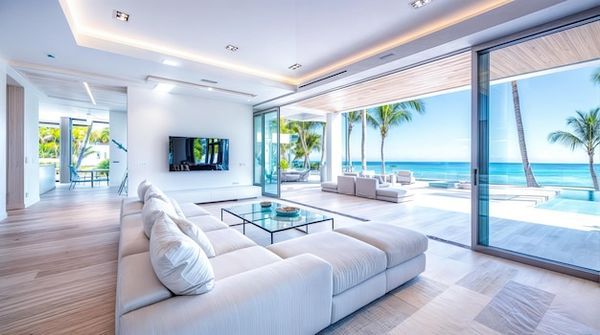
Saint Lucia is one of the most accessible Caribbean jurisdictions for foreign mortgage finance. Several local banks lend to non-residents, though terms are less favorable than for citizens.
| Parameter | Citizens / Residents | Foreign Buyers |
|---|---|---|
| Loan-to-Value (LTV) | Up to 90–95% | 50–70% (i.e., 30–50% deposit required) |
| Interest rate (typical) | 5–7% | 6–8% |
| Term | Up to 25–30 years | Up to 15–20 years |
| Currency | XCD | XCD (some banks offer USD) |
| Mortgage stamp duty | 1–1.2% of loan amount | |
Banks Offering Property Loans
| Bank | Product | Notes |
|---|---|---|
| Bank of Saint Lucia (BOSL) | Land loans, home construction, mortgages | Largest local bank. 5 branches. Various residential loan products. |
| 1st National Bank | "1st Home" mortgage product | Est. 1938. 7 branches. MSME and personal lending focus. |
| CIBC Caribbean | Residential mortgages | Regional bank. Trade finance capabilities. |
| Republic Bank (EC) Ltd | Home loans | Regional network (117 branches). Acquired Scotiabank operations. |
| Saint Lucia Development Bank (SLDB) | Housing facility loans | Government-owned. Focuses on national development. May require residency. |
Requirements for Foreign Mortgage Applicants
- Valid passport and proof of address (home country)
- Proof of income: employment letters, tax returns, or audited financials
- Bank statements (typically 6–12 months)
- Credit report from home country
- Property valuation by a bank-approved surveyor
- Proof of source of funds (AML/KYC compliance)
- Approved ALHL (or CBI approval in progress)
- Life insurance policy (may be required as loan security)
Developer Financing
Some resort developments offer in-house financing, which may be more accessible than bank mortgages. Cas en Bas Beach Resort (Hyatt) offers up to 50% developer financing. A'ILA Resorts may offer payment plans for CBI investors. Always compare developer terms against bank mortgage rates.
Property Management Companies
If you are an absentee owner, professional property management is essential. Companies handle maintenance, tenant management, vacation rental marketing, and compliance with local regulations.
| Company | Services | Focus Area |
|---|---|---|
| Blue Sky Luxury | Vacation rental management, concierge, 300-point property inspection, 24/7 on-ground support | Luxury villas island-wide. 180+ properties in portfolio. |
| Islander Villas (Janus) | Turnkey vacation rental management, marketing, guest services, maintenance | Vacation rental investment. Guided investment process. |
| Oasis Marigot | Hotel-like villa rental service, concierge, housekeeping | Marigot Bay and surrounding areas. Premium service. |
| Paradise Properties | Sales, rentals, and property management | Full-service real estate agency with management division. |
| Tropical Villas | Villa rentals and owner management services | Island-wide villa management and booking. |
| The Landings (in-house) | Resort rental programme for owners | The Landings resort residents only. |
| Cas en Bas / Hyatt (in-house) | Branded rental programme, guaranteed yields 6–10% | Cas en Bas Beach Resort owners only. |
Typical Property Management Fees
- Long-term rental management: 8–12% of gross rental income
- Vacation rental management: 15–25% of gross rental income (higher due to marketing, turnover, and guest services)
- Maintenance-only retainer: USD $150–$500/month depending on property size
- One-off inspection / check-in: USD $50–$150 per visit
Affordable & Social Housing
The government is addressing the housing affordability gap through international partnerships and CBI-funded projects. Housing remains a critical need, with demand outstripping supply particularly in the lower and middle segments of the market.
Housing Initiatives (2024–2026)
| Initiative | Funding / Value | Details |
|---|---|---|
| Taiwan Eximbank Housing Loan | US$20 million | Concessionary loan from Taiwan’s Export-Import Bank for affordable housing construction. Targeted at low-income and first-time homebuyers. One of the largest dedicated affordable housing financing packages in Saint Lucia’s history. |
| Rock Hall Social Housing | CBI-funded | Social housing project in Rock Hall, funded through CBI programme revenues. Provides subsidized homes for qualifying low-income Saint Lucian families. Demonstrates the government’s commitment to channelling CBI revenue into domestic social programmes. |
| Talvern Social Housing | CBI-funded | Additional CBI-funded social housing project in Talvern. Together with Rock Hall, these projects represent a significant investment in affordable housing stock from CBI revenues. |
Updated Building Code (November 2024)
Saint Lucia adopted an updated national building code in November 2024, aligned with the OECS Building Code framework. Key changes include enhanced hurricane resilience standards (150 mph wind resistance), improved energy efficiency requirements, and stricter seismic design criteria. All new housing projects, including affordable housing developments, must comply with the updated code. The DCA (Development Control Authority) is responsible for enforcement and building permit approvals.
Market Trends 2024–2026
Demand Drivers
- Record tourism arrivals in 2024: 435,959 stayover visitors (+14% y/y) and 723,500 cruise passengers continue to fuel demand for vacation rental properties, boutique hotels, and short-term rentals. However, early 2025 saw a ~3% stayover decline (UK -15%, Canada -19%), offset by expanded US airlift for winter 2025–26.
- CBI programme surge: 5,642 CBI applications in 2023–24 (424% increase), with ~70% choosing the real estate route. Post-July 2024 threshold increase to $240K ($300K for real estate), volumes expected to moderate. A'ILA Resorts remains the sole active CBI project.
- Hewanorra Airport expansion: US$175M modernization; contractor bidding closed Oct 2025, construction expected Q1 2026, completion by 2029. New terminal (1.2M pax capacity), 5 jet bridges, parallel taxiway.
- Cabot Saint Lucia: World-class luxury golf resort and residential community (Point Hardy Golf Club ranked #76 in the world, GOLF Magazine Top 100). Villas priced US$5.6M–$12M in the ultra-luxury segment. Horizon Villas ($5.6M+) delivering from Dec 2025. Permanent three-level clubhouse (bar/terrace, restaurant, entertainment with bowling, golf simulators, theatre) completing 2026. Short Course (Trevor Dormer design) planned. 320 homes planned. Transforming Cap Estate into an ultra-premium destination and one of the highest-end real estate markets in the Caribbean.
- Secrets St. Lucia: 355-room Hyatt all-inclusive opened June 2025 at Choc Beach, adding a major branded resort to the northwest coast.
- Digital nomad demand: Growing interest from remote workers seeking properties with high-speed internet (Starlink now available island-wide), co-working access, and lifestyle amenities
- Affordable housing push: Taiwan Eximbank US$20M concessionary loan for affordable housing. CBI-funded social housing at Rock Hall and Talvern. Updated building code adopted November 2024 with enhanced resilience standards.
- ~2,000 new hotel rooms in the pipeline across Secrets (355), A'ILA (538+), Courtyard by Marriott (140), Cas en Bas (90), Coconut Bay expansion, and other projects.
Market Dynamics
- Yield compression: A 200 sqm house earned ~5.25% rental return last year vs. ~3.57% currently, reflecting rising purchase prices outpacing rental growth in some segments
- Sustainable development premium: Properties with solar panels, rainwater harvesting, and eco-friendly design command higher valuations and attract ESG-conscious buyers
- Limited supply in prime areas: Cap Estate, Rodney Bay waterfront, and Marigot Bay have very limited available land, supporting price stability
- North-end transformation: The A'ILA mega-resort ($1.3B) at Mt. Pimard/Rodney Bay, plus Secrets St. Lucia (355 rooms) at Choc Beach, and Sapphire Sands Villas at Reduit Beach (opening Feb 2026) are significantly increasing premium inventory on the northwest coast. Courtyard by Marriott opening near Castries port in 2026.
- Branded residences trend: Hyatt (Cas en Bas + Secrets), Hilton (Harbor Club), Marriott (Courtyard), and potential future brands entering the market, increasing institutional-grade inventory
Risks & Considerations
Key Risks for Investors
- Hurricane exposure: Saint Lucia is in the hurricane belt (June–November). Hurricane insurance is essential (premiums: 1–2.5% of insured value, deductibles: 2–5%)
- Small market, low liquidity: Resale can take 6–18 months; the market is thin compared to major jurisdictions
- 10% non-resident seller stamp duty: Reduces net proceeds significantly when exiting
- Construction delays: Materials are largely imported. Shipping delays and contractor scheduling common
- No New York Convention: Saint Lucia is not a party to the convention on enforcement of foreign arbitral awards—contract disputes rely on local courts
- CBI programme changes: Government reforms (March 2025 announcements) may affect the real estate CBI route
- Water scarcity: The 2026 dry season is developing as a high-impact event, potentially the most severe in 10–15 years (comparable to 2020 and 2009–10). WASCO reports a 10% production reduction in the northern system. Properties should have water storage tanks (5,000+ gallon recommended for commercial use). Major pipeline projects (John Compton Dam–Ciceron US$22.8M, Bonneterre–Gros Islet) will improve reliability by 2027–28.
Practical Tips for Real Estate Investors
Before You Buy
- Visit Saint Lucia at least twice—once in high season and once in low season—to understand the reality of daily life, traffic, and weather
- Hire independent professionals: your own attorney (not the seller's), your own surveyor, and your own property inspector
- Verify DCA planning permission and zoning for the property's intended use (residential vs. short-term rental vs. commercial)
- Check flood and landslide risk maps—some hillside and coastal properties are vulnerable
- Understand the total cost of ownership: property tax + insurance + maintenance + management fees + utilities
- If considering CBI, compare the NEF route ($240K) vs. the real estate route ($300K+) and determine if the property investment makes financial sense independently
During the Purchase
- Include an ALHL contingency clause in the sale agreement (allowing withdrawal if the license is denied)
- Use your attorney's escrow account for the deposit—never pay directly to the seller
- Obtain a professional property valuation before committing—asking prices may differ significantly from market value
- For condos/strata: review the body corporate accounts, meeting minutes, and service charge history
- Verify that all utilities (electricity, water, internet) are connected and functional
- If buying from a developer: check their track record, financial backing, and completion guarantees
After Purchase
- Arrange hurricane insurance immediately (required before hurricane season June–November)
- Register with the Inland Revenue Department for annual property tax
- If renting out: register for VAT (if turnover exceeds XCD $400,000/year), collect the Tourism Levy, and declare rental income
- Engage a local property manager if you are an absentee owner—properties deteriorate quickly in tropical climates without maintenance
- Consider a water storage tank (1,000–3,000 gallons) for drought resilience
- Install hurricane shutters and maintain them annually
Related Pages
Citizenship by Investment
CBI programme, approved projects, and the real estate route to citizenship
Legal & Tax Framework
Property law, stamp duty, ALHL, taxation overview
Cost of Living
Housing costs, utilities, daily expenses
Business Directory
Real estate agents, law firms, property managers
Investment Checklist
Step-by-step action plan with timelines and costs
Interactive Map
Locate key areas, developments, and amenities